Saturday, 24 November 2012

Looking forward to..the Dark Ages

I am looking forward to a new series on BBC - The Dark Ages: An Age of Light in which art critic Waldemar Januszczak embarks on a trip around the world to discover if the Dark Ages were actually a time of artistic achievement inspired by novel ideas and religion.  This is a subject dear to my heart since it is the background of my biography Columbanus: Poet, Preacher, Statesman, Saint which more or less explores the same subject.  Historically the Dark Ages are dark to us for two reasons.  It is thought of as an illiterate age but it was far from that.  The reason we think so is because they wrote on paper, made from Egyptian papyrus, which does not survive in our damp northern climate.

In the 7th century the supply of papyrus to western Europe dried up due to the Arab incursions and upheavals all over the Middle East and it was at this time that writers, mainly monks, switched to using parchment and vellum. (The aristocracy was only illiterate in the sense that they did not read or write if they could get someone else to do it for them.) The benefit of this for us is that those books have lasted very well indeed.  Our earliest books such as The Lindisfarne Gospels date from the late seventh century.  The downside for historians is that no public records which are the mainstay of historical research survive from the end of the Roman Empire through to the seventh century.  We know they kept written public accounts because the 6th century Frankish king Chilperic threw all his tax records on the fire but much else must have been destroyed.  The later monks occasionally oblige us by copying records out onto parchment and vellum thus ensuring their survival but these are usually just records relating to their own monastery recording for example the monatery's title to its various lands and not general information that would be available from census records and tax accounts.
 
In art too we are deprived of a real view of this period between the end of the empire and the early middle ages proper.  There are no portraits even of the kings and queens of the period, no glimpse of the great and good.  This is not because they were so self-effacing as to not require to have their portraits painted but because paintings were made on wood panels in tempera (water-colour) which does not survive over the centuries.  Our earliest such paintings in Europe date from the 12th century, much later in historical terms. But we know from Egyptian mummies of the late Roman period that portrait painting had reached extremely high levels of skill and realism and there can be no doubt that portraits of the great and good between 400 and 750AD did exist and were probably of very fine quality.  Again our damp climate is to blame.  The Egyptian mummies have survived because they were buried in sand and in very dry conditions. 
 
The Dark Ages was not a period of great technological advancement.  By and large they stuck to the technology that they had achieved in the late Roman period but the level of craftsmanship we know from the artefacts we do have was extraordinarily high.  It was not a primitive age.  Above all it was an age of ideas, the age when most of our own ideas began to flourish.  In religion particularly there was an explosion of radical thinking which spilled over into science and politics.  We may not have much left to go on but what we do have is of vital importance to our understanding of modern history.
 
The Dark Ages: An Age of Light begins on BBC4 at 10:00 p.m on Thursday 29 November.  My book on Columbanus is published by Imprint Academic and is available from bookshops and libraries.

Friday, 23 November 2012

The Nativity - where did the shepherds come from?

Pope Benedict is just about to publish a scholarly book on the various stories relating to the nativity of Jesus examining how they come to be included in the gospels.  Matthew for example only tells us that Jesus was born in Bethlehem and fails to suggest that there was anything miraculous or unusual about his birth. Rather more interestingly the apocryphal gospels suggest that Jesus had a twin brother in which case of course the traditional nativity scene should present two babies in the manger but convention dictates that there is only ever one child in the Madonna's arms. This is because the scene is not meant to be a historical representation of the facts surrounding the birth of Jesus but is an effective bit of allegorical symbolism.  The Holy Family represents the Trinity - God the Father represented by Joseph, God the Holy Ghost or Spirit of Holy Wisdom represented by Mary and God the son represented by the infant Jesus.  It's an easy visual image to enable Christians to grasp the very tricky philosophical principles of Trinitarianism, one that even small children understand.
 
So what about the shepherds and angels?  If Jesus was actually born one of twins in a regular house in Bethlehem where did they come from?
 
The shepherds and angels occur only in the gospel of Luke which is believed to have been written down somewhere between 100AD and 150AD, quite some considerable time after the events the writer was describing. I believe the date is significant.  In 110AD the Emperor Hadrian is recorded as having become confused between the followers of Horus in Alexandria and the Christians in the same city.  Possible the two had combined as it was common practice for the early Christians to work alongside their pagan counterparts and gradually try to achieve a merger. 
 
The introduction of the followers of Horus into the Christian community is significant because at least two features of the story of Horus have found their way into the nativity.  It was Horus who was born in a stable and whose birthday was celebrated on 25th December.  Jesus, it is believed, was actually born around 4BC and on 6th January.  The Celts too seem to have had a corresponding myth regarding the birth of the sun-god Lud.  The Venerable Bede tells us that 25th December was known to the Celts as 'Mother's Night' suggesting a corresponding nativity myth associated with that date.  The mother goddess was Dana or Don, depending on whether you are British or Irish.  However we have no record of any shepherds or angels appearing in either the Egyptian or Celtic versions.
 
So where did Luke come by his beautiful story?  I believe the answer is he pinched it.  Luke's gospel is deliberately fashioned to appeal to a western audience.  You will note that in his account of the sermon of the mount he omits the obviously Jewish features such as the tradition of circumcision which appear in Matthew.  Luke knew that his western readers would not be interested in this and it might put them off accepting the more universal aspects of Jesus's teachings.  Instead he slips in to the narrative key symbols that they would find familiar.  Luke lifted the story, not to put too fine a point on it, from one of the Roman masters of literature, Virgil.
 
Why do I think this?  I have no proof as such but around forty years before the birth of Jesus Virgil wrote a great series of poems called The Eclogues which tell the tale of shepherds in northern Italy and recount the details of their lives living in the fields and on the hillsides.  In Book 4 of the Eclogues Virgil announces the arrival of a 'prince of peace' in terms which have long been thought to foreshadow the coming of Christ.  In fact the passage was so well-known in the Middle Ages Virgil was deemed to be a prophet or a wizard.   
 
Eclogue 4 describes a Golden age 'foretold in prophecy' when the 'first-born' of Justice comes down from heaven and is born in human form beginning an era in which 'hearts of iron cease and hearts of gold inherit the whole earth'.  In this age mankind will be freed from fear and all the stain of past sins will be cleansed.  The child will eventually return to the life of the gods.  The parallels with the Christian story are obvious.  But Virgil adds a bit more to his prophecy that is not contained in Judaic Messianic tradition.  His Prince of Peace will receive as his first birthday presents 'nature's small presents'.  He will be surrounded by the fruits of the natural world, the kind of gifts that in the Christmas tradition are represented by the shepherds.  Virgil seems to echo Isaiah when he writes that 'the ox will have no fear of the lion'.  Small wonder that mediaeval Christians believed he was foretelling the birth of Jesus.
 
At the end of Eclogue 4 Virgil observes that the baby is already overdue and the birth is imminent but then he returns to his original narrative and we hear no more of it.  Of Virgil's original ten Eclogues survive but he framed his poem according to an earlier Greek poem by Theocritus which has eleven books.  I have a theory - and it is only a theory - that Virgil did in fact write eleven books and in his final book - because this is the way the story has been tending - his shepherds visit the new-born prince of peace.  Whether Virgil included angels or whether they were Luke's invention I couldn't say - except to note that the Egyptian Coptic gospels are full of angels - but by slipping Virgil's shepherds into his narrative of the nativity Luke achieved a literary masterstroke suggesting that the much-revered Latin poet had predicted the birth of the Christian Son of God thus giving him a western provenance to match that of earlier Jewish tradition.  In Mediaeval Britain which was heavily economically dependent on the wool-trade shepherds abounded and it is no surprise to find that this is the most popular gospel story in mediaeval literature. Mediaeval Europeans knew Luke and they knew Virgil.  What happened to Virgil's final Eclogue if it existed?  Now there's the mystery.

Saturday, 27 October 2012

Une Vie BBCR4

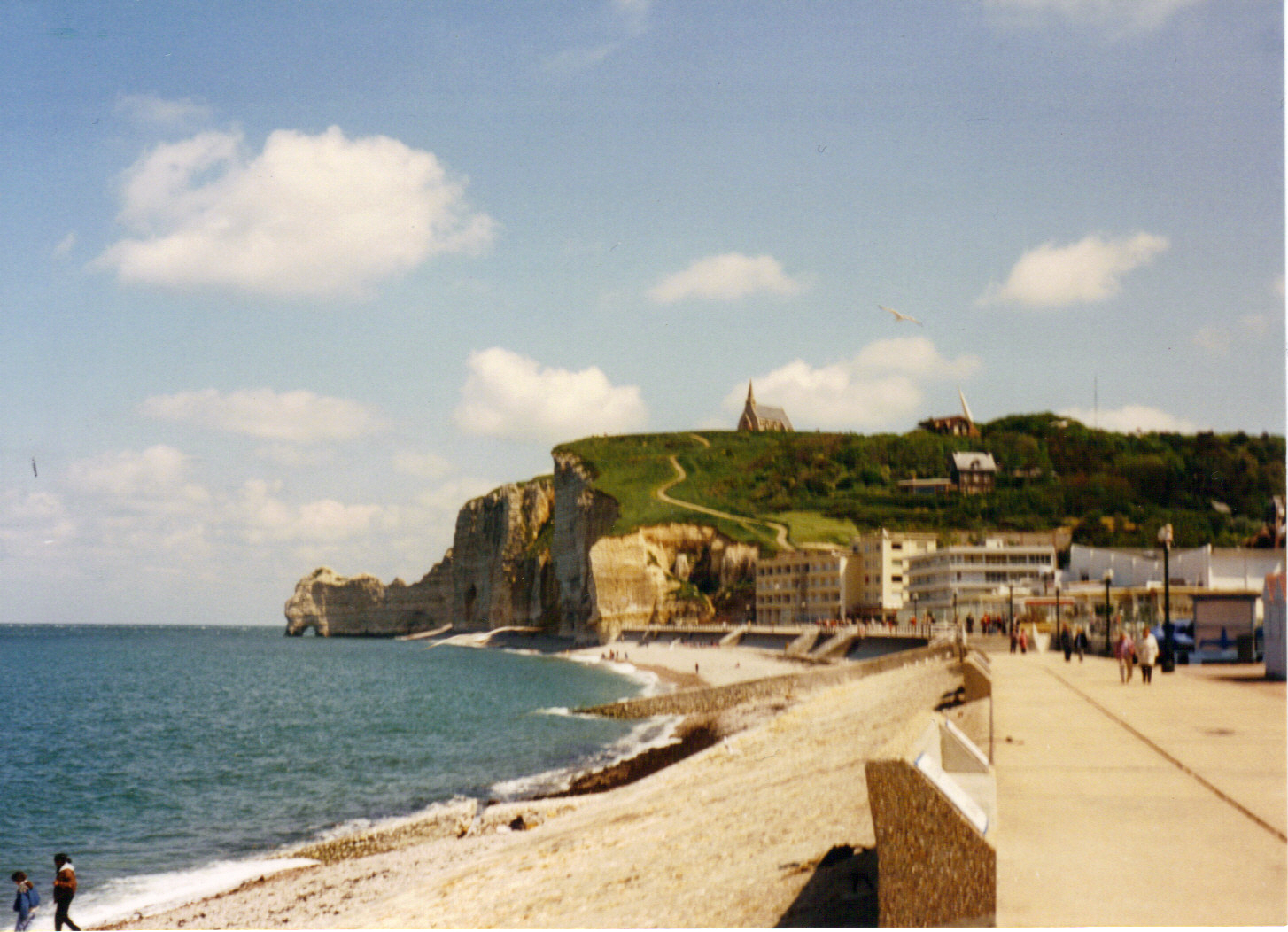
Little Gate, Etretat, Normandy
Fifteen minute drama Une Vie is on BBC Radio 4 all week 10:45 am/7:45 pm.  Aimee-Ffion Edwards plays Jeanne in a week long adaptation of Guy de Maupassant's first novel.  The character of Jeanne is based on his mother who appears as a character in my novel The Lady in Grey, a fictional exploration of the life of her son.  Une Vie charts the rocky marriage of Maupassant's parents although he remained on good terms with his feckless father even after their acrimonious split.   The story is set in his home in Etretat pictured above.

Friday, 26 October 2012

Book news: Random House and Penguin to merge?

Random House and Penguin to merge?

Pearson confirmed today that it is in talks with giant publisher Bertelsmann regarding a possible merger between imprints Penguin and Random House.  Such a move will be the first major structural shift in the global publishing industry since 2006 when the French media firm Lagardere acquired Time Warner Book Group creating Hachette.  In a statement the UK listed group said 'Pearson confirms that it is discussing with Bertelsmann a possible combination of Penguin and Random House' although the two companies have yet to reach agreement.  This news is perhaps not surprising as it follows Penguin's recent announcement that they would seek to recover unearned advances from their top writers.  Better news for the imprint is that two of their books are currently in the top ten - Martin Jacques study of the growing economic power of China When China Rules the World:the End of the Western World (reviewed in The Guardian 21 June 2009) and The Better Angels of Our Nature by cognitive scientist Steven Pinker who argues that violence has declined in the modern world (reviewed in the Guardian 7 October).
 
The Stella Prize
 
Australia has launched a $50,000 prize for women's writing which will be called the Stella Prize.
 
Waterstones to sell Kindle devices
 
In the UK, bookshop chain Waterstones has decided to sell Amazon's Kindle e-reading devices in recognition of the influence of the new technology on the book market.  Kindles went on sale in their stores from yesterday.

Thursday, 25 October 2012

Christmas gift suggestion

'It was the season of frost fairs and mistletoe..'


Not quite but there is a distinctly autumn chill in the air this morning prompting me to think about forthcoming Christmas shopping and ideas for gifts.  My own offer is my swashbuckling Christmas adventure Master Merryman which tells the story of events surrounding the Christmas Feast of 1497 held by the Chancellor of the Exchequer, Cardinal John Morton, to celebrate the signing of the marriage contract between Prince Arthur of England, son of King VII, and the daughter of the King and Queen of Spain, Princess Catherine of Aragon.  
 
Cardinal Morton has a slight problem.  The Spaniards are insisting they will only sign the contract subject to The Condition involving a certain handsome prince who is at that moment languishing in the Cardinal's cellar as a prsioner. Cardinal Mortan recruits his secretary, playwright Henry Medwall and another English playwright Miles Bloomfield (who between them taught Shakespeare everything he knew) and the rest of the King's Players to find a way to fulfil the Condition without delivering his prisoner into their hands.  All is going smoothly until an unfortunate co-incidence and a one-eyed Portuguese knight, the finest swordsman in Europe, start getting in their way.
 
 
 Shopping details: Available at http://www.amazon.com/dp/BOO4NBZL5G
Price: Paperback £6.40 GBP or $7.95US Kindle editions £2.55 GBP £3.99US
The book can be read for free if you are a member of Amazon Prime.
The story is suitable for any reader from aged 10 upwards.
 

Wednesday, 24 October 2012

London Film Festival winners

It's that time of year again.  The trees are changing from green to gold, Guy Fawkes night is nearly upon us and the London film festival has drawn to a close.  And the winners were...

Best film: Rust and Bone

First feature competition - the Sutherland Award went to Benh Zeithin for his film Beasts of the Southern Wild - a brilliant distinctive vision of life on the edge of the world.

The Documentary Competition - the Grierson Award was won by Alex Gibney for his film Mea Maxima Culpa: Silence in the House of God (Great title) - a damning indictment of the Catholic Church and attempts by the Vatican to cover up one of the most appalling scandals of our time.

Best British Newcomer was Director and Screenwriter Sally El Hosaini for My Brother the Devil.

BFI Fellowships went to Helena Bonham Carter and Tim Burton.

None of my predictions won anything.  Oh well.. there's always next year.

Thursday, 20 September 2012

Good news for UK books

Book sales in the UK are reported to have soared by more than £2m last week as Thursday 13th September was one of the biggest dates of the year for new releases.  More than 200 hardback books were officially published on that day including Terry Pratchett's (big favourite of mine) Dodger and Martina Cole's The Life.

Also happening this weekend The London Art Book Fair is being held at Whitechapel Gallery and to celebrate The Hobbit's 75th anniversary HarperCollins is throwing a Second Breakfast in the gardens of Fulham Palace.  I have to declare a special interest in The Hobbit as I discovered that J.R.R. Tolkein based his idea of The Shire on the Cole Valley near his home in Sarehole.  It is now well into Birmingham but when I was young we used to play in The Dingles, as the park is now known, and catch minnows and sticklebacks in the clear water of the River Cole in dappled sunshine - absolutely magical and I can well see how it inspired Tolkein with his fairy version of an ideal rural England.